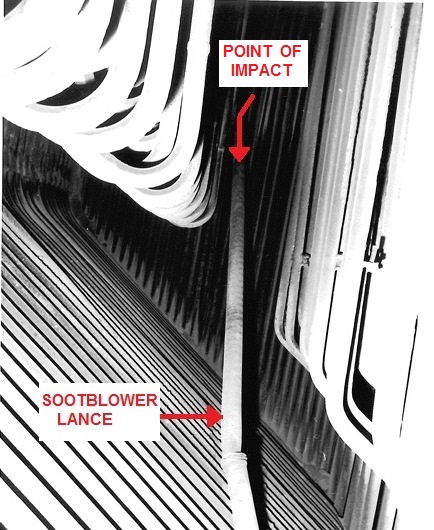
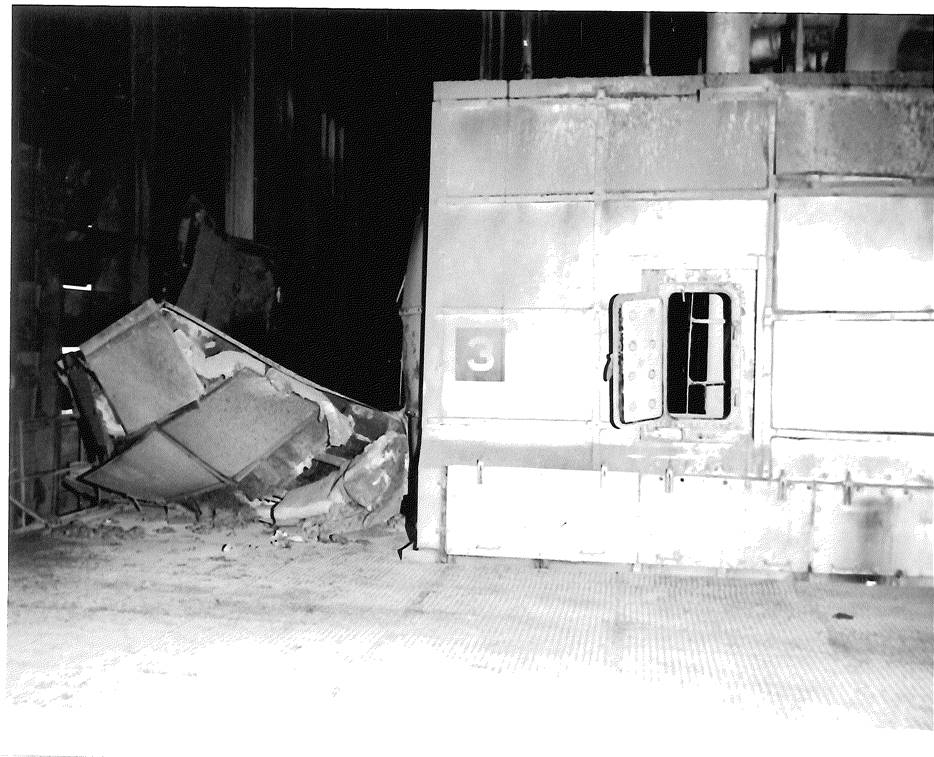
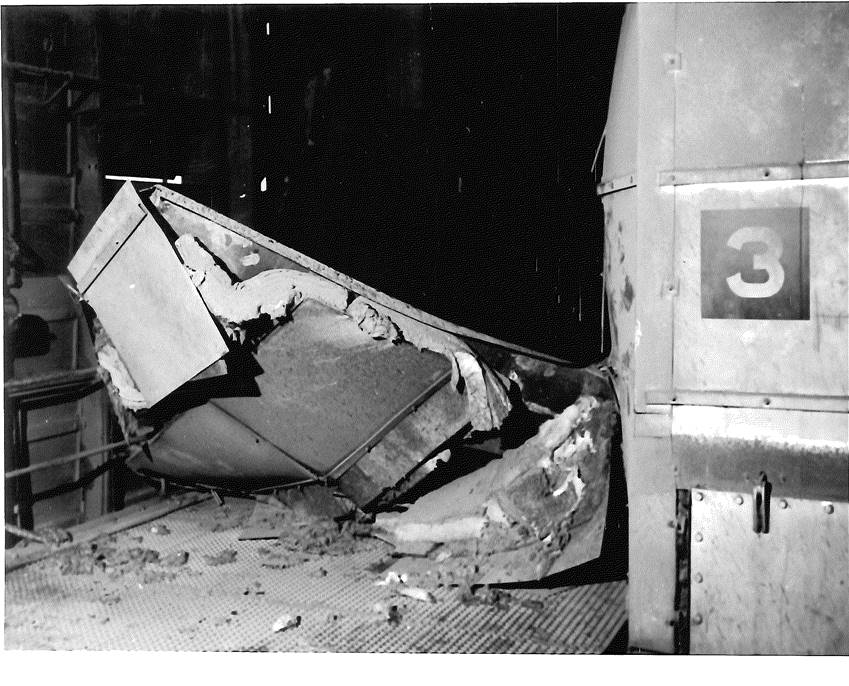
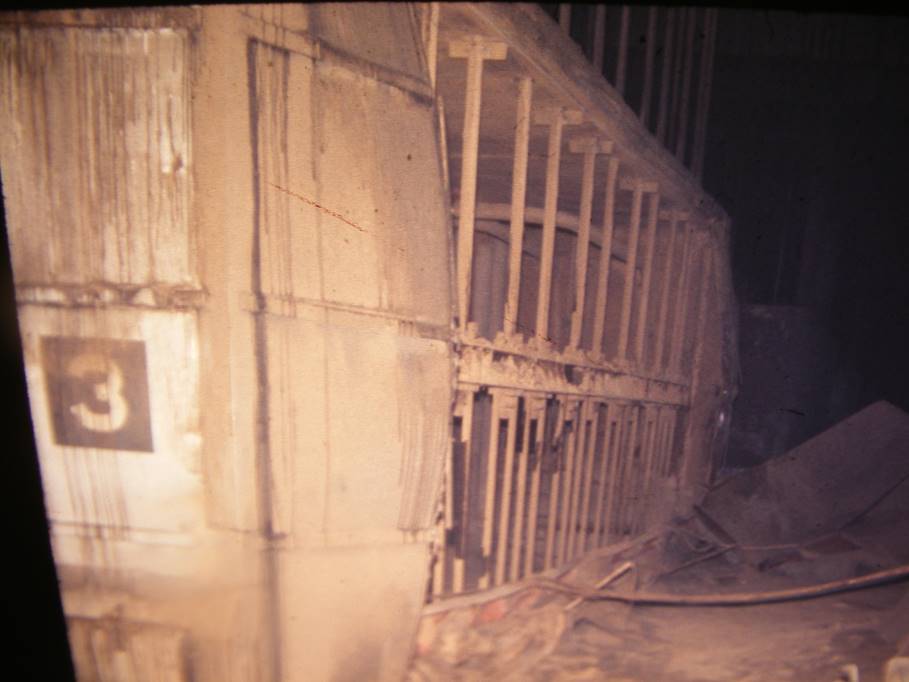
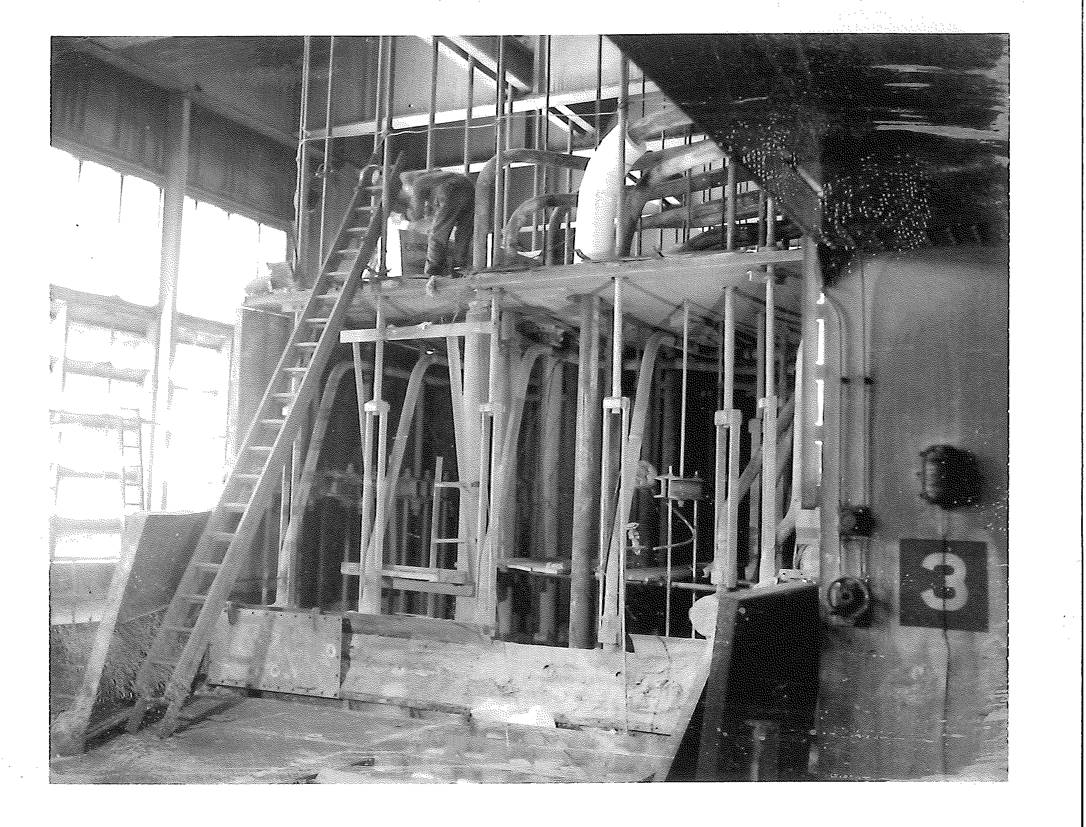
This incident happened one afternoon shift when a routine sootblowing operation went wrong. A lance sootblower came adrift from its retaining mechanism and was launched into the boiler by the force of the steam that was normally used for cleaning the internal boiler tubes.
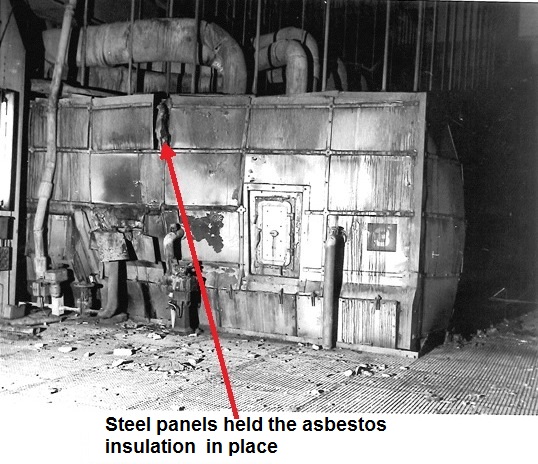
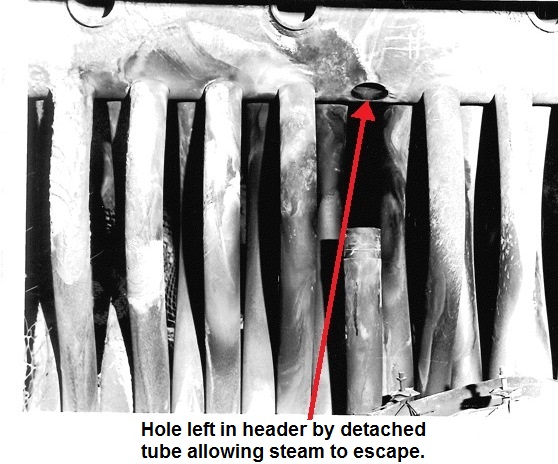
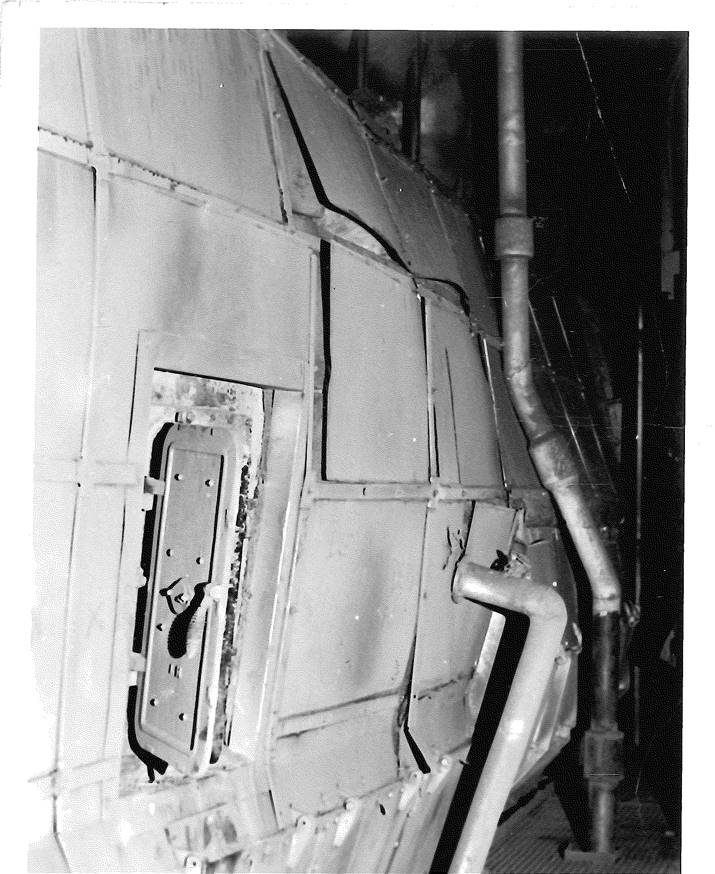
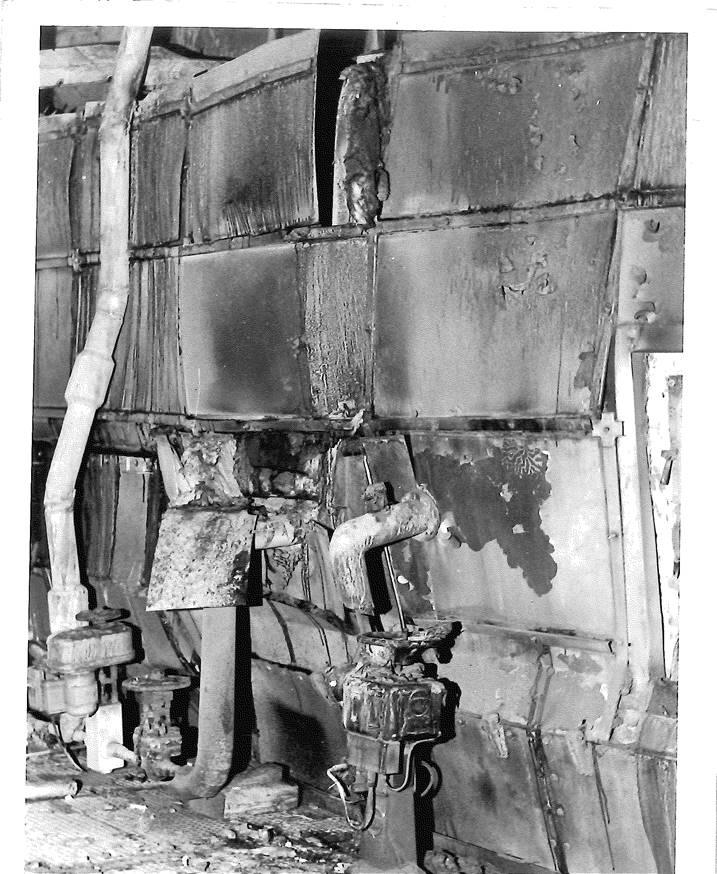
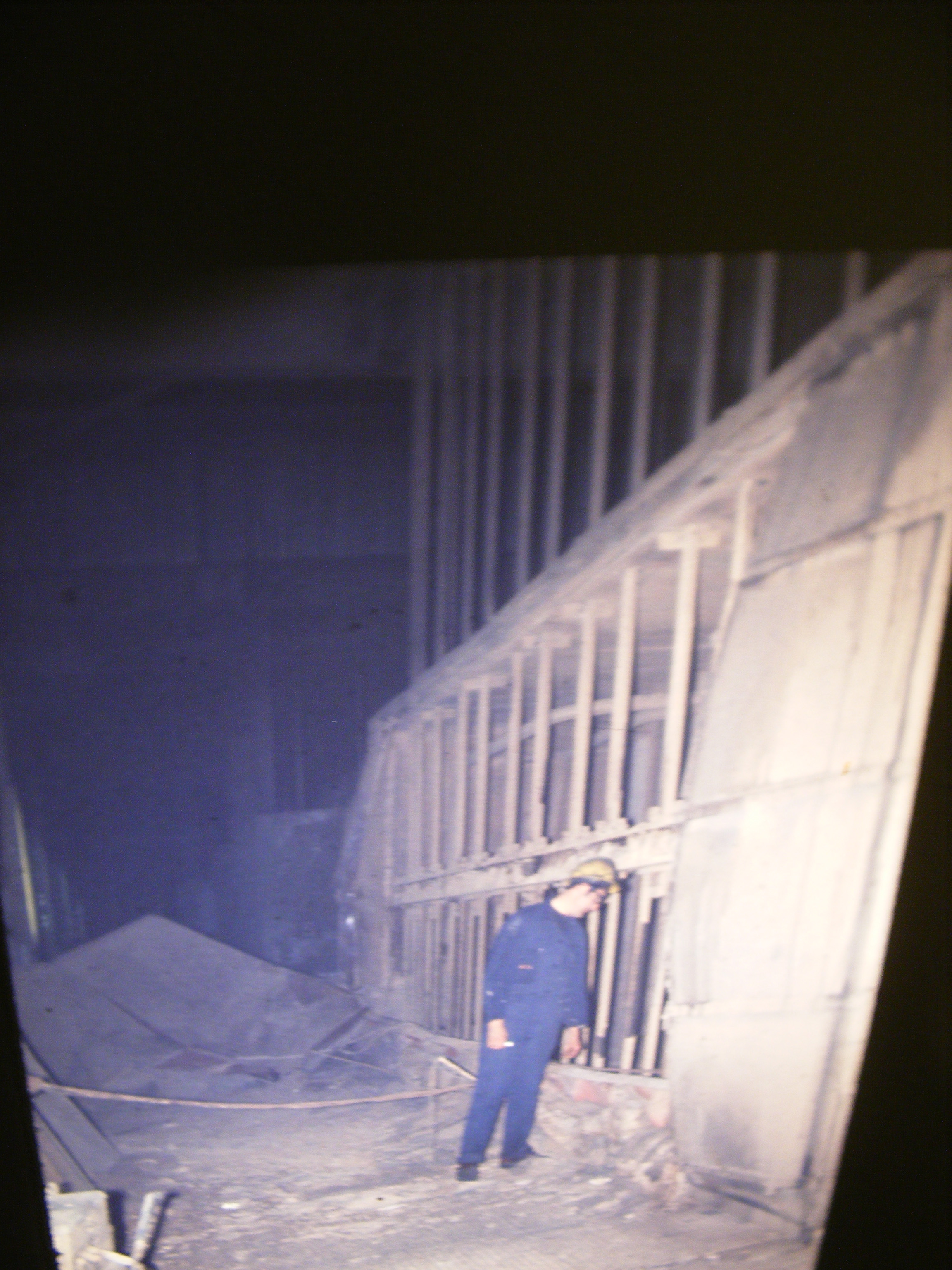
It hit the centre division wall with such force that it pulled one of the tubes out of its header in the top dead space. This released steam into the sealed top dead space at approx.110bar 320 degC causing an explosive force that blew the back wall completely off the dead space and caused all the other dead space walls to bow out. In doing so this released large quantities of asbestos insulation from under the metal retaining plates on the walls and on the roof of the dead space. It also released all the asbestos that was inside the dead space. It also either blew off or shook loose asbestos insulation on external pipework attached to the top of the boiler.
It was extremely fortunate that no one was in the area at the time or they would have been killed. This asbestos became airborne and part of the huge dust cloud that filled the massive boiler house at Castle Donington. 
The operator in the control room knew something drastic had happened and rapidly shut the unit down. The Shift Engineers were then left with the task of going through the dust and debris to investigate what had happened. Ted Beckett was the Shift Charge Engineer on duty who made the plant safe and carried out the initial investigation.
People who witnessed this incident said the boiler house remained dusty for days. We don’t know the details of any clean up operation but dust containing asbestos would have settled on top of all the ledges, girders, pipes and equipment in the station.Although this was an extreme example it is typical of plant failures that can occur in large coal fired power stations.
Definitions

Sootblowers Devices which are used to clean slag and dust build up from the internal tubes of a boiler to maintain an efficient heat transfer. They do this by blowing the debris off the tubes with high pressure steam. There are several different types of sootblower. The lance sootblower feeds a rotating lance several metres in and out of the boiler blowing steam out of the end to clean the superheater tubes.

Photo from Terry Bird
Top Dead Space A sealed chamber at the top of the boiler containing the headers and boiler tubes that either feed or receive steam and water to and from the various parts of the boiler. It also contains parts of the mechanism that suspends the boiler from the top of the boiler house. At Castle Donington the top dead space was known as `Annies Room’.
Header A large diameter tube which connects all the smaller diameter steam and water tubes that make up the various parts of a water tube boiler. The headers are carefully designed to ensure an even distribution of steam and water to the various parts of a boiler.
Centre Division Wall – a wall of tubes inside the boiler that separated the combustion chambers in the Castle Donington boilers.
Boiler 3 Explosion